by Siva | Feb 3, 2025 | General Insights |
Recruitment attracts candidates, while selection filters them. Both are essential steps in the hiring process, but they serve different purposes. Understanding the distinction and aligning both with your business goals is key to hiring the right talent and driving organizational success.
Recruitment is about attracting a pool of qualified candidates. It’s an outward-facing process that focuses on employer branding, job postings, sourcing, and engaging potential talent. The goal is to generate interest and build a diverse candidate pipeline. Effective recruitment involves clear job descriptions, using multiple sourcing channels, and proactive outreach—including to passive candidates who aren’t actively job hunting.
Selection, on the other hand, is the process of evaluating candidates and choosing the best fit for the role. This inward-facing step includes screening applications, conducting interviews, skills testing, background checks, and final decision-making. Selection ensures you pick candidates who not only have the skills but also fit your company culture and align with business objectives.
Why are both necessary? Without strong recruitment, you risk having too small or unqualified a pool of candidates. Without robust selection, you may hire quickly but poorly, leading to low performance and high turnover.
To maximize hiring success:
- Recruiters should build a compelling employer brand and diversify sourcing strategies to attract the right candidates.
- Hiring teams should use standardized, structured interviews and skill assessments to fairly and effectively evaluate applicants.
- Both processes should be designed to promote diversity and align with long-term business goals.
When recruitment and selection work hand-in-hand, they create a seamless hiring experience that attracts, evaluates, and secures the talent that drives business growth.
by Siva | Jun 28, 2024 | General Insights |
Every successful organization moves forward with a unified vision. This vision becomes reality through a well-thought-out strategy and its effective execution—where the Human Resources (HR) department plays a pivotal role.At the heart of HR strategy lie several interconnected processes. These processes aren’t just administrative checklists—they are building blocks that, when designed and implemented effectively, add continual value to the organization.
But what exactly are these processes? And how do they contribute to strategic execution? Let’s break them down and explore how each component forms the framework for HR success.
What Are HR Processes?
HR processes encompass the entire employee lifecycle—from forecasting manpower needs to training, performance evaluation, and even separation. Each process is interdependent, and their efficiency lies in how cohesively they function together.
Here’s an overview of the core HR processes:
1. Human Resource Planning
Often mistaken as merely manpower forecasting, Human Resource Planning is much broader. It includes:
- Recruitment strategy
- Evaluation systems
- Promotion planning
- Layoff and exit management
It’s about ensuring the right people are in the right roles at the right time—and planning for every stage of the employee lifecycle.
2. Recruitment
This is the first active step in building your workforce. Recruitment aims to attract candidates who match the organization’s job criteria and cultural fit. It includes:
- Job postings
- Employer branding
- Talent pipeline development
3. Selection
After attracting talent, selection is about filtering the best-suited candidates through interviews, assessments, and reference checks. The goal is to find individuals whose skills, experience, and potential align with the role.
4. Hiring
Hiring is the final decision-making step—choosing the right candidate and making the offer. It also includes negotiating compensation, issuing offer letters, and ensuring a smooth onboarding experience.
5. Training and Development
Once on board, employees must be empowered to grow. Training and development help enhance their technical skills, soft skills, and leadership abilities. This process includes:
- Orientation
- Technical and soft skills training
- Leadership development programs
- Continuous learning and upskilling
6. Employee Remuneration and Benefits Administration
Money may not buy happiness, but it sure impacts motivation. This process involves:
- Salaries and wages
- Bonuses and incentives
- Fringe benefits and perks
Fair and competitive compensation not only helps in retaining talent but also ensures compliance and internal equity.
7. Performance Management
Performance Management Systems (PMS) ensure that both employees and departments are aligned with organizational goals. It involves:
- Setting clear KPIs
- Regular performance reviews
- Feedback mechanisms
- Reward and recognition programs
Modern PMS tools are automated and data-driven, helping managers make informed decisions on training needs, promotions, and incentives.
8. Employee Relations
Employee retention is one of the biggest challenges organizations face—especially in competitive industries. While many factors influence retention, HR can directly control:
- Workplace environment
- Conflict management
- Health and safety
- Employee wellness programs
- Counseling and stress management
Strong employee relations create a sense of belonging and loyalty, which is critical for retention.
Why Integration Matters
No HR process works in isolation. A seamless experience—from recruitment to retention—can only happen when there is coordination, conformity, and consistency between each function.
For instance, a well-structured training program must align with the performance management system, which in turn should influence promotion and compensation decisions. When HR processes are siloed, organizations lose efficiency and risk employee dissatisfaction.
Conclusion: Strategy Needs Structure
HR strategies don’t succeed because they sound good—they succeed because they’re backed by strong, synchronized processes. Whether you’re a startup building your HR foundation or an enterprise optimizing existing systems, it’s crucial to treat each HR process as a strategic pillar, not just an operational necessity.
By designing your HR processes to be agile, employee-focused, and interdependent, you set the stage for a resilient and future-ready organization.

by Siva | Apr 23, 2024 | General Insights |
HR often gets reduced to procedures and paperwork: job offers, performance warnings, compliance documents, handbooks. But if that’s all people see, they’re missing something vital. Behind every form, policy, or guideline is a person — someone in HR who genuinely wants to make work better for others.
The Misunderstanding Around HR
There’s a perception that HR is the “rule enforcer” — the people who step in when someone’s in trouble, or when things go wrong. But the reality is that most HR professionals don’t get into this work to police people. They choose HR because they care about culture, fairness, and growth. They’re not just writing policy for policy’s sake — they’re trying to create clarity, structure, and support.
The Human Side of Structure
It’s easy to see policies as cold or restrictive. But in truth, good HR policies exist to:
- Protect people from unfair treatment
- Ensure everyone is on the same page
- Prevent misunderstandings that harm trust
- Support diverse needs in the workplace
Yes, HR builds systems — but they do it to serve people.
What many don’t realize is how often HR has to advocate for that human side. They speak up in leadership meetings to defend employee wellbeing. They rewrite policies to reflect changing norms. They navigate the space between business needs and people’s realities — and that space isn’t always comfortable.
Empathy Is a Skill — and a Strength
Empathy is often HR’s most powerful (and underappreciated) tool.
Every conversation HR has — whether it’s onboarding a new hire, navigating a complaint, or supporting a struggling manager — requires emotional intelligence. Not just to respond appropriately, but to really understand where someone is coming from. And when done well, HR becomes something much bigger than a department. It becomes a cultural cornerstone — the part of the organization that keeps humanity at the center of work.
A Reminder: HR Is Human, Too
Let’s also remember: HR professionals are people too. They feel joy when someone gets promoted. They feel the weight of letting someone go. They feel the tension of trying to do right by everyone — even when it’s impossible to please everyone. And when we recognize that, we start treating HR not just as a department, but as part of the beating heart of the company.
by Siva | Apr 22, 2024 | General Insights |
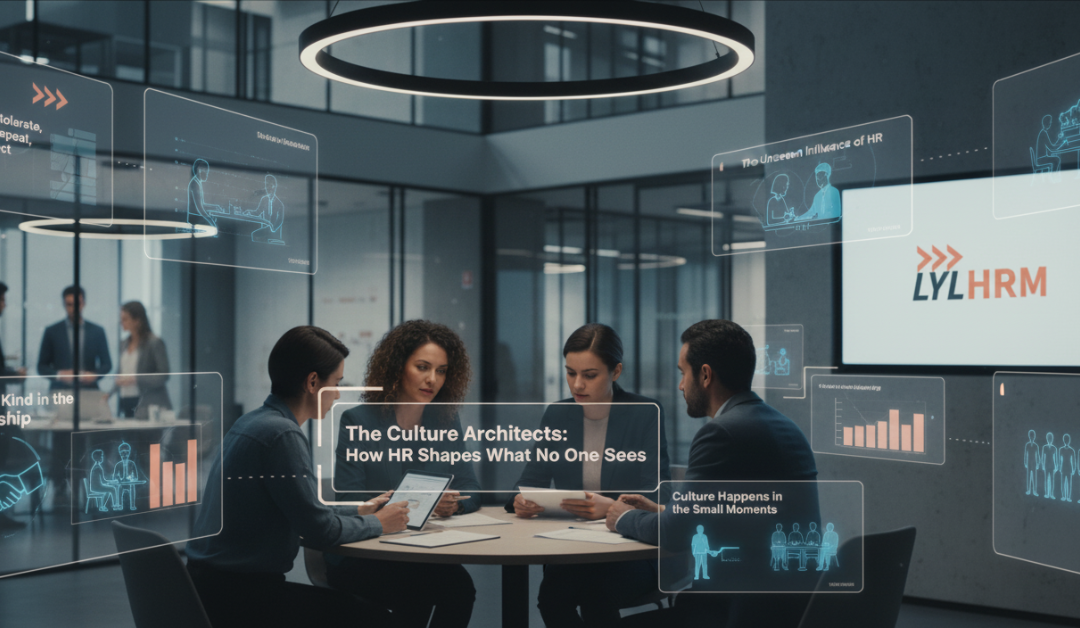
Culture isn’t written in a handbook.
It doesn’t live on a poster.
It’s not built in one meeting or declared in one email.
Culture is built in what we tolerate, reward, repeat, and protect—and HR is often the quiet force shaping every one of those things.
While leaders may speak about values, it’s HR professionals who anchor those values in real action. They’re the ones translating abstract ideals like “inclusion,” “integrity,” or “growth” into day-to-day decisions. And they do it not for recognition — but because they know culture shapes everything.
The Unseen Influence of HR
Most people don’t realize how often HR is behind the tone of a company:
- When a new hire is onboarded with care and clarity — that’s HR.
- When a complaint is handled with empathy and fairness — that’s HR.
- When policies are rewritten to reflect evolving values — that’s HR.
- When trust is protected, even in hard decisions — that’s HR.
In a world where culture is often talked about as “everyone’s responsibility,” HR holds the blueprint. Not to dictate how people behave, but to model what good looks like — even when no one’s watching.
Culture Happens in the Small Moments
HR doesn’t shape culture through speeches or slogans. They shape it through the quiet decisions most people never see:
- Choosing to coach a manager rather than escalate conflict
- Standing firm on inclusive hiring even when it takes longer
- Ensuring exits are handled with dignity, not detachment
- Protecting psychological safety in tough team conversations
These moments are small, but they’re not insignificant. They are culture in action.
A Silent Kind of Leadership
HR rarely asks for credit — and often doesn’t get it. But that’s part of their quiet strength. They lead through influence, not authority. Through structure, not spotlight. Through consistency, not control.And in doing so, they become the architects of workplace culture — building not just what a company says it is, but what it truly becomes.
by Siva | Sep 6, 2023 | General Insights |
In today’s business world, corporate corruption isn’t just an occasional misstep — it’s a growing concern that can silently undermine years of progress and trust. While scandals in government and public sectors often grab headlines, unethical practices within corporations tend to be swept under the rug to protect image and investor confidence. From inflated expense reports to executive-level fraud, corporate misconduct takes many forms — and its long-term effects can be devastating. This is where the Human Resource Management (HRM) function becomes critical.
️ HR’s Role: A Responsibility Beyond Compliance
HR professionals are not only policy enforcers — they are guardians of workplace integrity. Their role in preventing corruption goes far beyond creating handbooks or conducting annual training.
Key responsibilities include:
- Maintaining transparency in hiring and promotions
- Implementing clear reporting channels for unethical behavior
- Ensuring disciplinary actions are fair and consistent
- Fostering a culture where integrity is non-negotiable
When done right, HR becomes the first line of defense against organizational misconduct — setting standards that promote both legal compliance and ethical conduct.
⚠️ When HR Is Compromised
The problem arises when the HR function itself becomes entangled in unethical practices — such as biased hiring, favoritism, or covering up internal wrongdoing. In such cases, corruption can spread unchecked, and employee trust begins to erode.
To mitigate this, organizations must:
- Support internal whistleblowers
- Strengthen third-party reporting systems
- Regularly audit HR decisions for bias or misconduct
Integrity starts at the top — but it’s sustained by those who manage the people and processes that shape daily culture.
The Cost of Ignoring Corruption
The impact of corruption isn’t just financial — it affects reputation, employee morale, and long-term sustainability. A single scandal can lead to:
- Loss of public trust
- Declining employee engagement
- Higher attrition
- Legal and regulatory penalties
Examples from global corporations show that ethical lapses at any level can damage an entire brand. And often, HR is called in after the damage is done, rather than being empowered to prevent it in the first place.
Prevention Over Damage Control
Cover-ups may seem like the path of least resistance, but they only deepen the problem. Instead, organizations must empower HR to act early, act fairly, and act transparently.
Building an ethical organization doesn’t happen by accident — it’s the result of daily, intentional decisions.
When HR leads with clarity and courage, organizations don’t just avoid corruption—they thrive with trust, accountability, and resilience. In an age of scrutiny and speed, HR’s role is more important than ever. Upholding values, setting ethical standards, and ensuring accountability aren’t just tasks — they’re the cornerstones of a credible, future-ready organization.
by Siva | Aug 24, 2023 | General Insights |
The workplace has evolved. Remote work is no longer a temporary fix — it’s a permanent feature of the modern corporate landscape. For HR professionals, this shift has brought new challenges, especially in two critical areas: recruitment and onboarding.Gone are the days of in-person interviews, office tours, and face-to-face onboarding sessions. Today, HR teams must learn to build connection, trust, and clarity — virtually.
So how do we get it right?
The Virtual Hiring Shift: What’s Different?
Hiring in a remote-first world introduces unique hurdles:
- No physical interaction to assess candidate body language or cultural fit
- Digital communication gaps that can lead to misunderstanding
- Limited visibility into how candidates engage with potential teammates
- Onboarding new hires without a physical sense of the workplace or its culture
What once happened naturally in office corridors and team lunches now has to be strategically recreated online.
Turning Challenges into Opportunities
Rather than viewing remote onboarding as a limitation, progressive HR teams are using it as a catalyst to reimagine their processes.
Here’s how:
- Structure Digital Onboarding with Intention
Use platforms like Zoom, Slack, or Microsoft Teams not just for communication, but for relationship-building. Schedule informal “coffee chats,” buddy programs, and team introductions to ease the transition.
- Make Use of Digital Tools
Onboarding documents, contracts, and tax forms can now be shared and signed electronically. Platforms like DigiLocker, HRMS tools, and e-signature software streamline compliance while reducing paperwork.
- Create Culture Digitally
Culture doesn’t only live in office walls. Use digital storytelling, leadership videos, and live Q&As to help new hires understand your values, mission, and team spirit — right from day one.
- Invest in Virtual Training Experiences
Replace passive video watching with interactive learning: live workshops, breakout rooms, quizzes, and collaborative projects help create a more engaging onboarding journey.
HR as a Strategic Partner
The HR function must no longer be seen as simply administrative — especially in remote-first models. It’s a strategic, culture-driving force. Agile, digitally savvy HR teams are now embedding themselves into business units, helping individual teams recruit, onboard, and retain talent that aligns with their unique dynamics. This decentralized, flexible HR model is fast becoming the norm.
It’s Not Just on HR — New Hires Must Adapt Too
The responsibility of effective onboarding is a two-way street.
New employees should be encouraged to:
- Show up for virtual trainings consistently
- Initiate conversations with colleagues and managers
- Explore company tools, platforms, and knowledge bases
- Engage with team-building efforts, even if remote
Proactive behavior helps speed up integration and ensures a smoother adjustment to the company culture.
The Future Is Digital — And Human
As we continue to navigate remote and hybrid work models, one thing is clear: HR must lead the transition with empathy, innovation, and strategy.